

The Mango Volcano: Thirty Years on Acatenango Guatemala
It was the full moon of 1996 when I climbed Acatenango for the first time. I was twelve years old, freshly back from the United States, and this was my way of reconnecting with the country I’d left behind. I had no idea what the day had in store.
My name is Max Baldetti. I’m forty-two now, and that first climb, at twelve, was the start of everything. Rafting came two years later. Since then, I’ve built my life around the outdoors — I’m an outdoor sports instructor, certified across hiking, canyoning, rafting, and river boarding, and I also work as a helicopter search and rescue technician. Everything I’ve trained in, I eventually realized, was really training for one thing: the ability to give back.
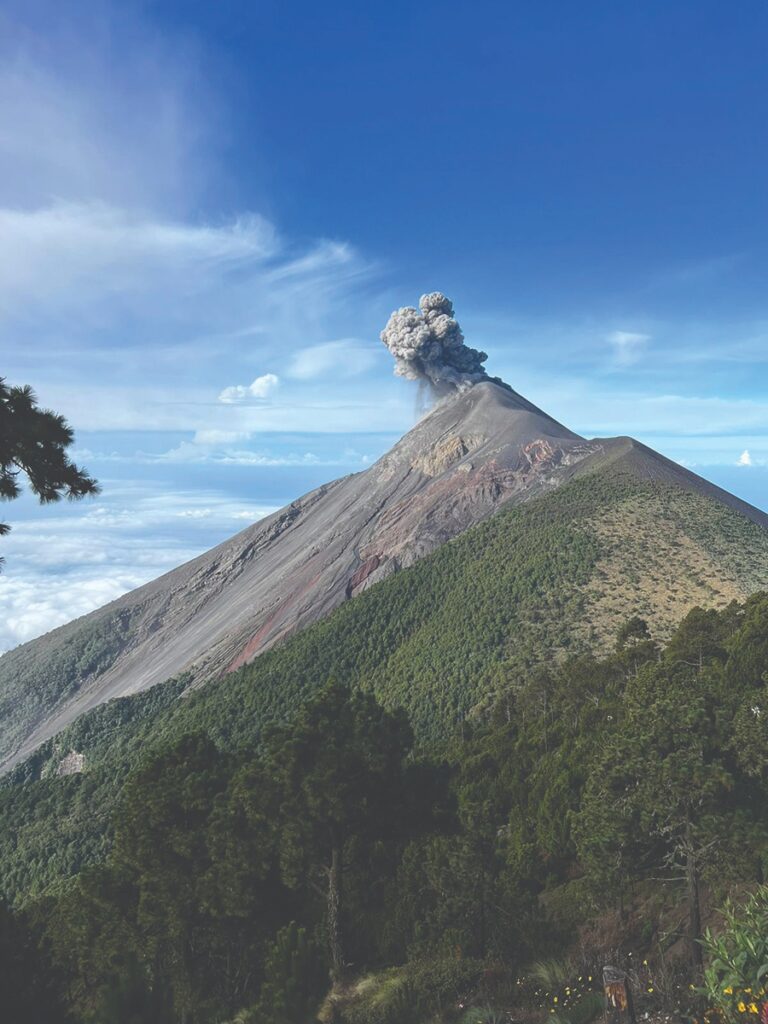
I woke up, packed my gear — though back then, “gear” meant a duffle bag with worn-out straps and a pair of Doctor Martens. I didn’t have the right clothing. I didn’t even know I needed it. I loaded my bag with water and whatever equipment we had and made my way across the valley to a small village called Concepción — the same place where, today, four-by-fours now gather to take climbers up the mountain.
I didn’t know what to expect. All I’d been told was that it would be a three-day, two-night hike. We moved through mountains, hills, forest, jungle — there was no real trail. Trees were our guide: you’d climb until you spotted a certain huge tree, and that told you to turn left. Find another, turn right. And so on.
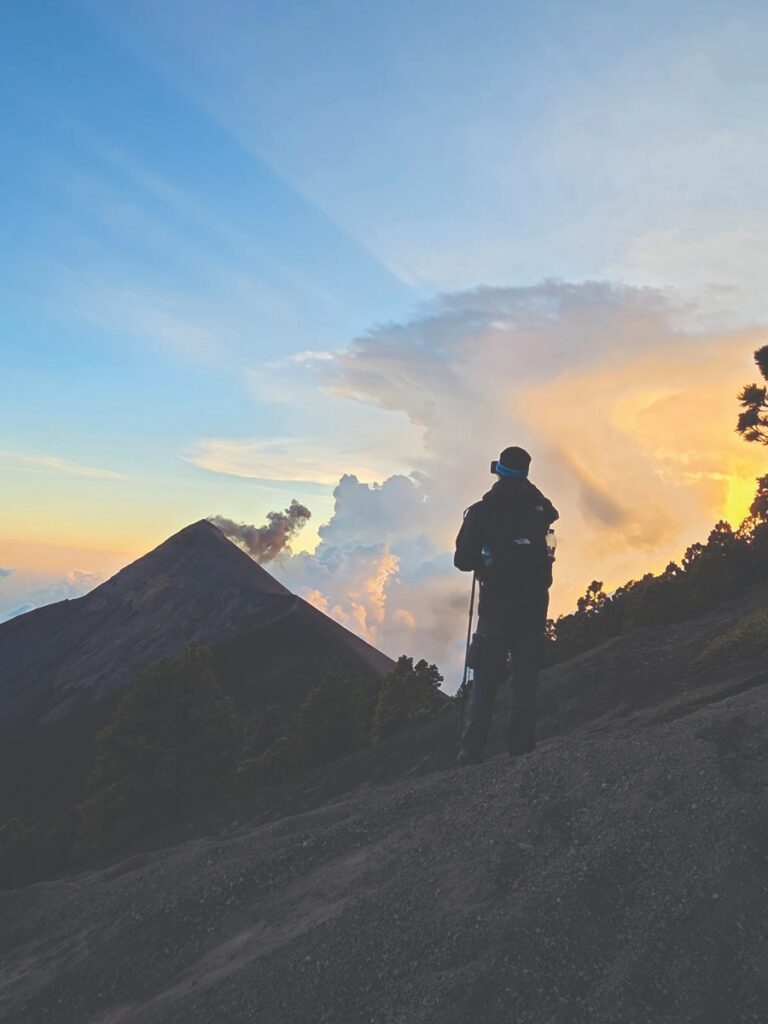
By the time we reached our first campsite — a spot now known as La Meseta — the sun was already setting. We’d started at seven in the morning and arrived around four in the afternoon: two hours of climbing that felt endless, bushwhacking the entire way. We were covered in mud, dust, and sweat. There, on a small patch of flatland, we built camp and cooked. Wild rabbits moved through the brush nearby. Not far off was the main campsite, but we skipped it — too crowded, even if “crowded” meant two other people. We liked our space.
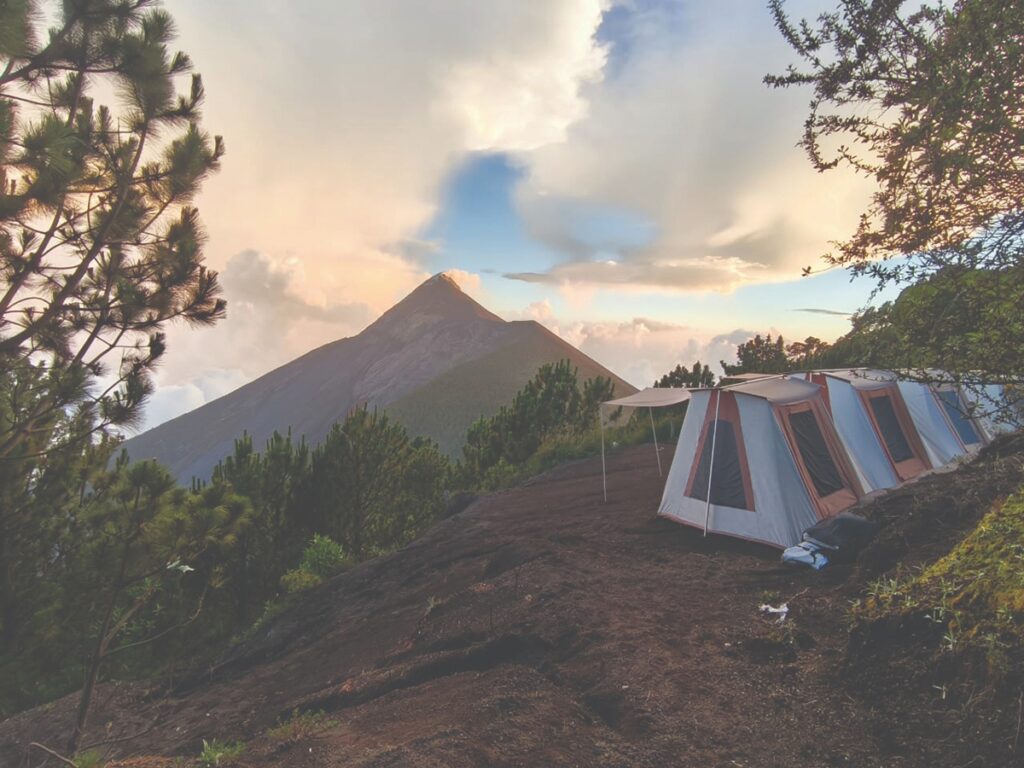
The next morning, we were up at four, breaking camp before sunrise. Then we hiked. And hiked. And hiked. This still wasn’t the highlight — this was just the push from camp one to camp two, up through a stretch called Conejo, then Las Marías, toward what we called Yepocapa, the smaller summit of Acatenango. We arrived around three in the afternoon, just enough time to set up before dark. There was a small refugio there, built by an association of climbers — real climbers — and we made camp knowing the real highlight was still ahead.
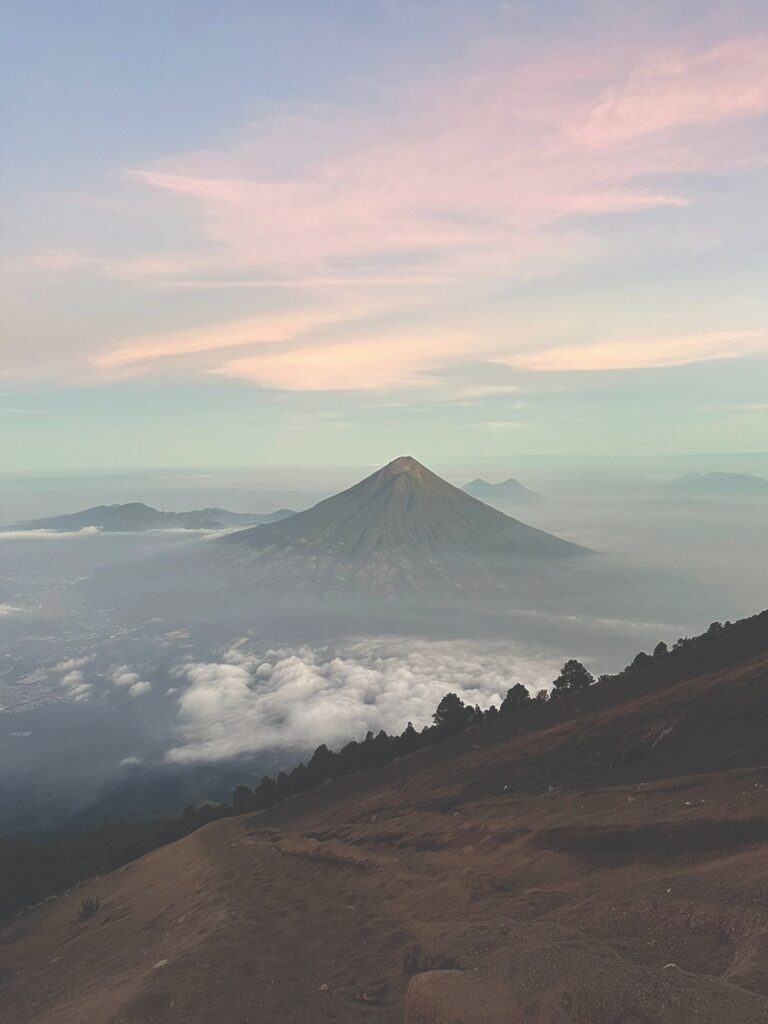
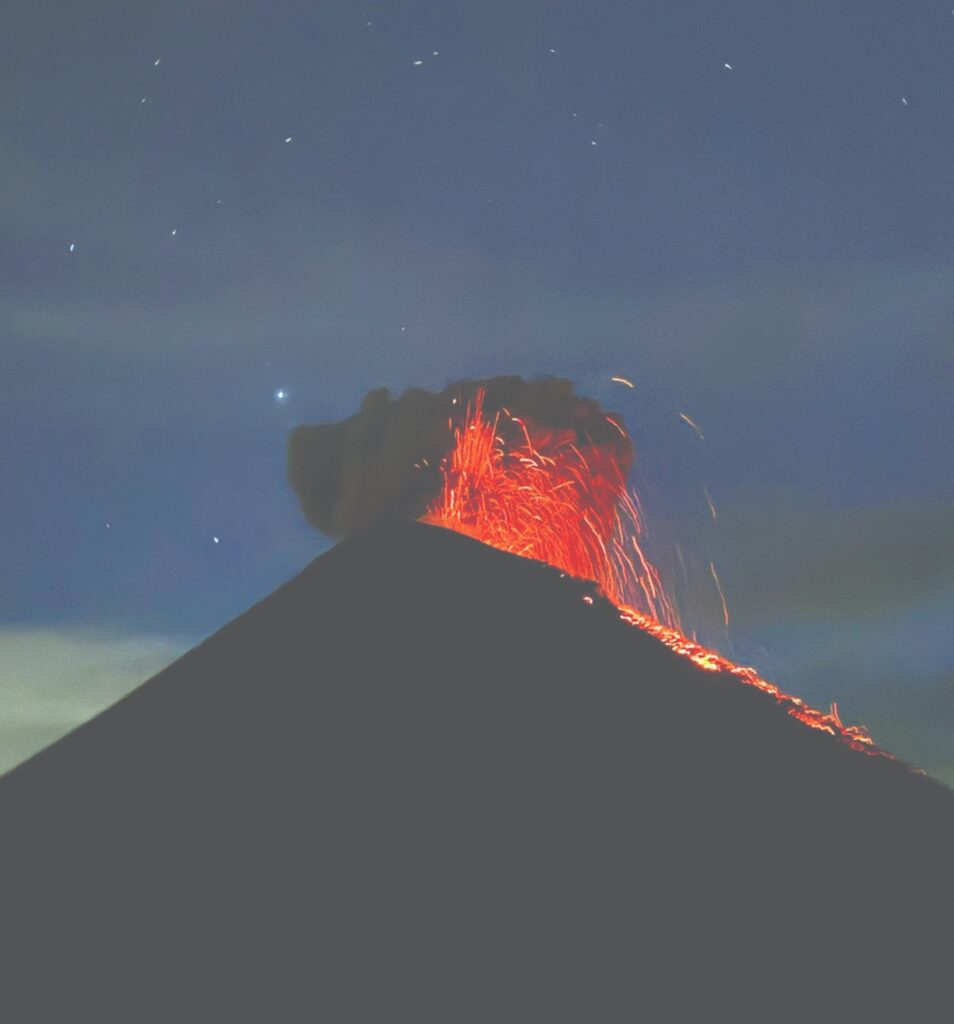
We woke at three the next morning and hiked through a stretch known as La Maldita, up to the highest point: 3,976 meters above sea level. And there it was — the volcano’s show.
That was 1996. Thirty years ago now. Climbing Acatenango recently, all of it came rushing back. Today, Camp 180 — my tour company — runs private trips up that same mountain. We try to preserve some of what made that first climb what it was, even though the trails have changed and access is far easier now. The magic is still there. You still set up camp, still watch the sunrise from that ridge. The difference is you no longer have to carry and cook everything yourself — we handle that now, and honestly, that’s part of what we love doing. But we’re far from the only ones. Dozens of companies run this route today, and I understand why. The mountain still has its pull.
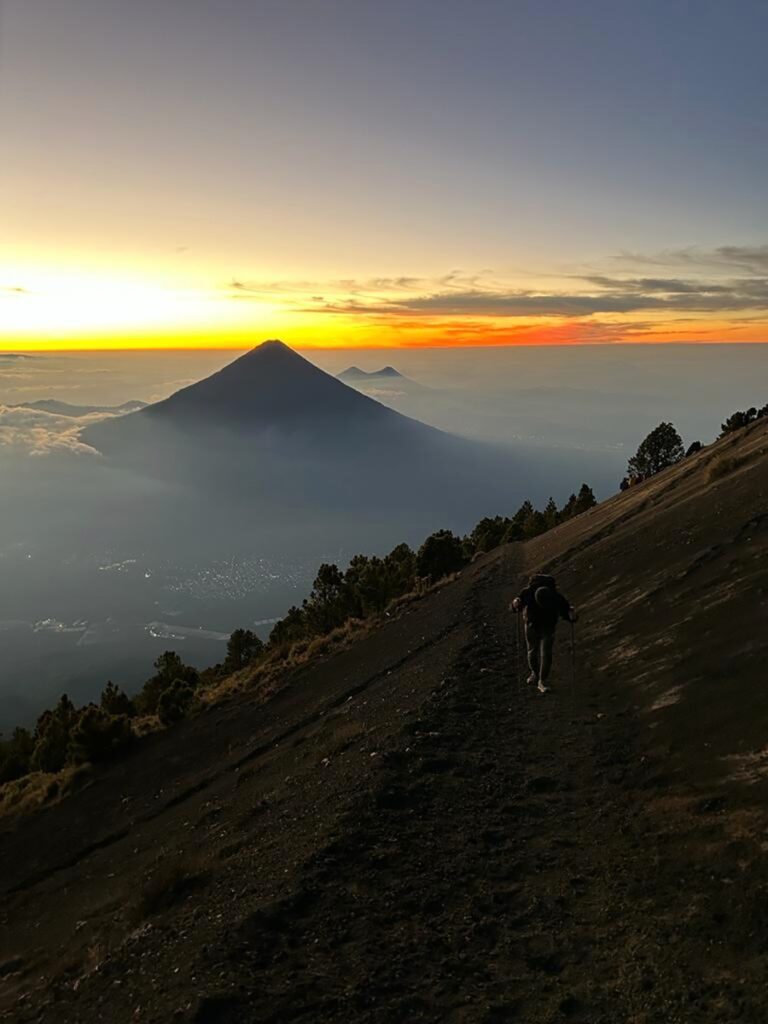
I remember reaching that first summit and feeling like my body had exploded into pieces and been rebuilt from scratch. I knew, right then, this was what I’d do with my life. I’ve climbed Acatenango more times than I can count — I stopped keeping track after 250. There was a year I climbed it every single week, just to know what it felt like in every season, every kind of weather, every mood the mountain could throw at me. I understand why people want this. People need this — the chance to go back to nature, to reconnect with themselves, to remember where they come from and figure out where they’re going. But the volcano is alive, and it needs to be treated that way.
Everything shifted after the year 2000, and shifted again, more sharply, after COVID. On high season now, at least 300 people are trying to reach the summit at once — it’s genuinely hard to find space up there. More campsites have appeared to meet the demand, which is, in its way, a good thing. But it raises real questions: what’s happening to the trash? To the waste this many bodies leave behind? New rules are starting to appear, and the people who run tours are trying to figure out, together, how to make this work — not just for business, but for the mountain itself.
Guatemala’s tourism institute is trying to bring operators together. CONAP, the country’s protected-areas authority, is setting new limits, because the volcano’s capacity is real, and we’re close to testing it. It’s easy to take a place like this for granted when it’s always been there. But it’s on us now — the people who climb it, guide it, love it — to figure out how this stays both an unforgettable experience and a sustainable one.
Tourism itself has moved through phases here. First, it was adventure tourism. Then it tipped into extreme — until people pulled back toward something more grounded. Then came sustainable tourism. Now the word everyone’s reaching for is regenerative. And that, to me, is the real question for Acatenango’s next thirty years: not just how we protect what’s left, but how a climb like this can give something back — to the people who make it, and to the mountain that’s carried all of us up.
Written by Max Baldetti
Photos by Camp 180
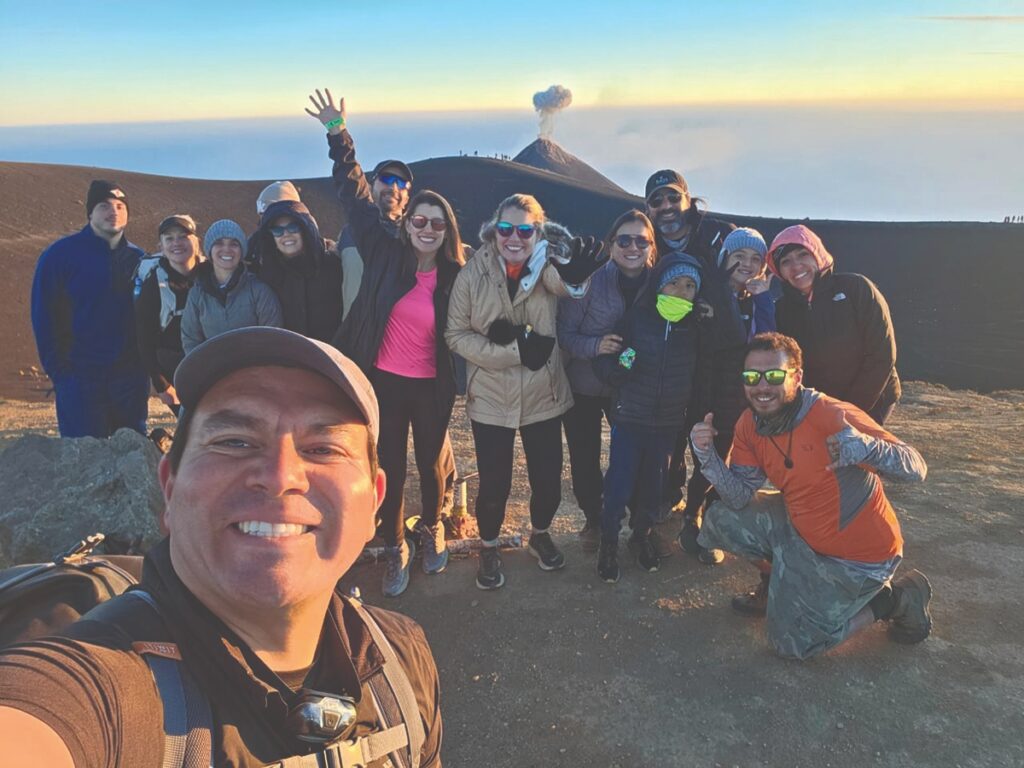
Max Baldetti, owner of Camp 180, specialises in private, personalised tours to Acatenango and destinations throughout Central America. With a focus on creating memorable outdoor experiences, Camp 180 offers visitors the opportunity to explore some of the region’s most spectacular landscapes with expert local guidance.
Max has also recently opened an outdoor store on 5th Avenue North, just a short walk from the Arch. The store offers a wide selection of quality gear and equipment for hiking, camping and other outdoor adventures—whether you’re preparing for an Acatenango climb or planning your next Central American expedition.
Address: Plaza del Arco, 5a Avenida Norte 31, Antigua Guatemala
Tel: +502 3032-7907