

“When Color Meets the Cross”
By Luis Noriega
There are places you visit, and then there are places that rearrange something inside you. Antigua Guatemala during Lent and Holy Week does the latter.
Each spring, as jacaranda blossoms scatter purple across cobblestone streets, this small colonial city at the foot of three volcanoes becomes the spiritual epicenter of Central America. But don’t expect a parade in the conventional sense. What unfolds here is slower, heavier, more intimate. It is devotion you can smell, hear, and almost touch.
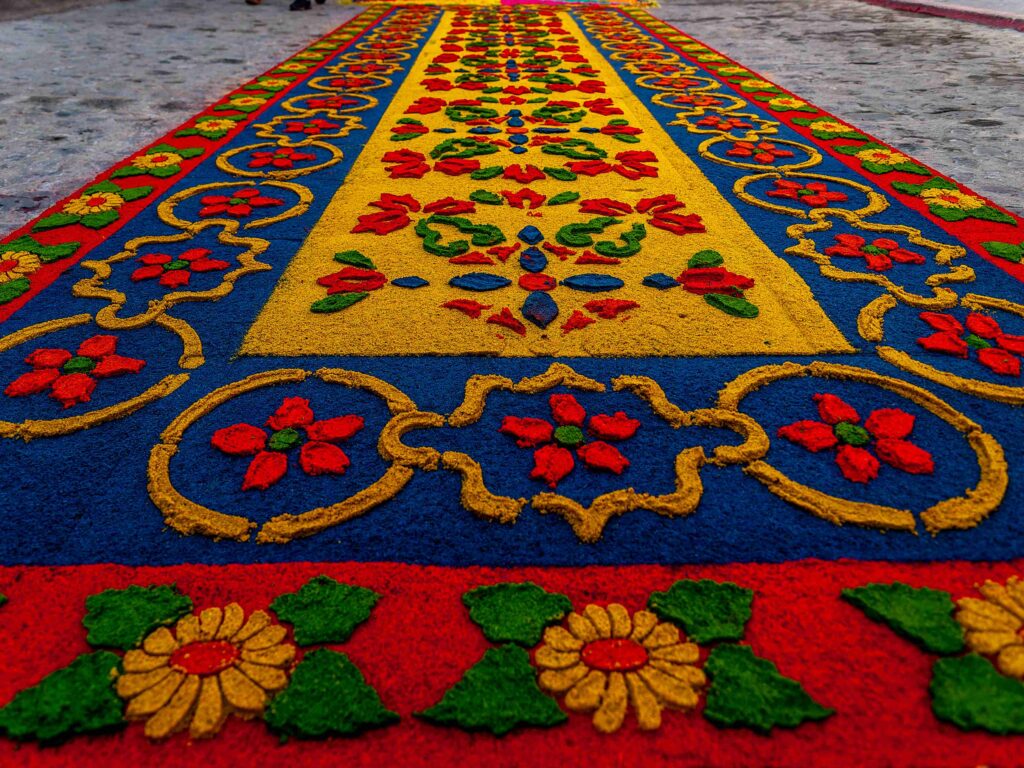
At dawn, the streets begin to transform. Families kneel on the stones, carefully sprinkling dyed sawdust into elaborate patterns. Pine needles are laid down in fragrant carpets. Bright bougainvillea petals, oranges, and carved wooden stencils become intricate designs known as alfombras. These ephemeral works of art stretch for blocks—biblical scenes, geometric mosaics, bursts of color against centuries-old facades.
And then, just as carefully as they were created, they are walked over.
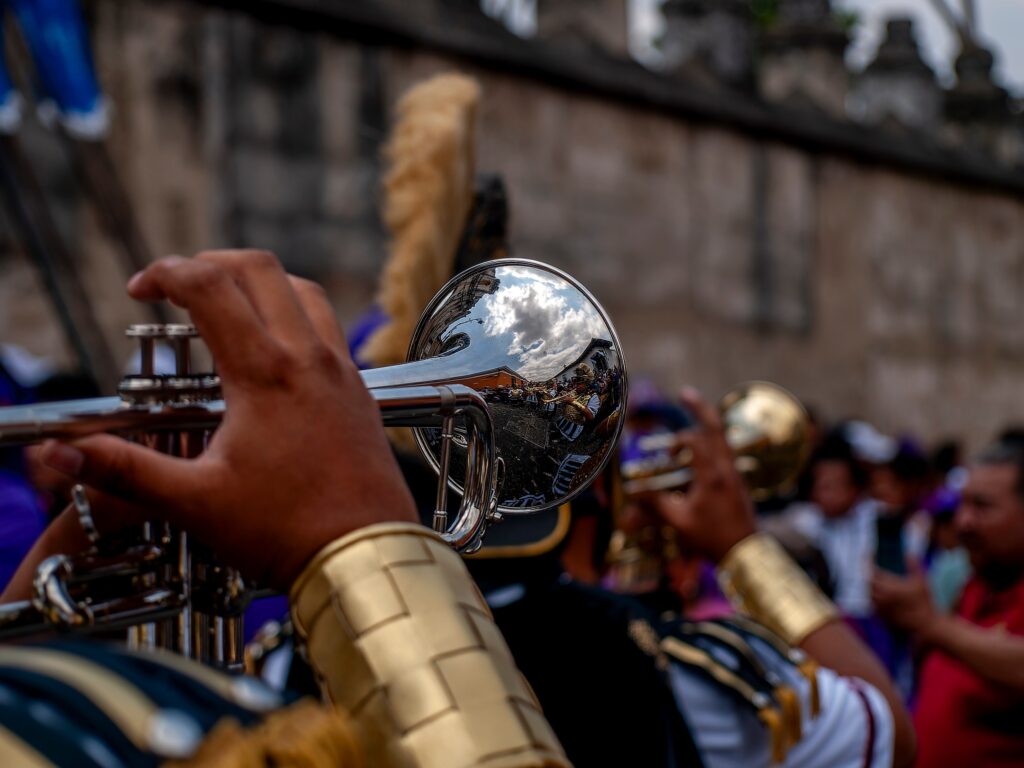
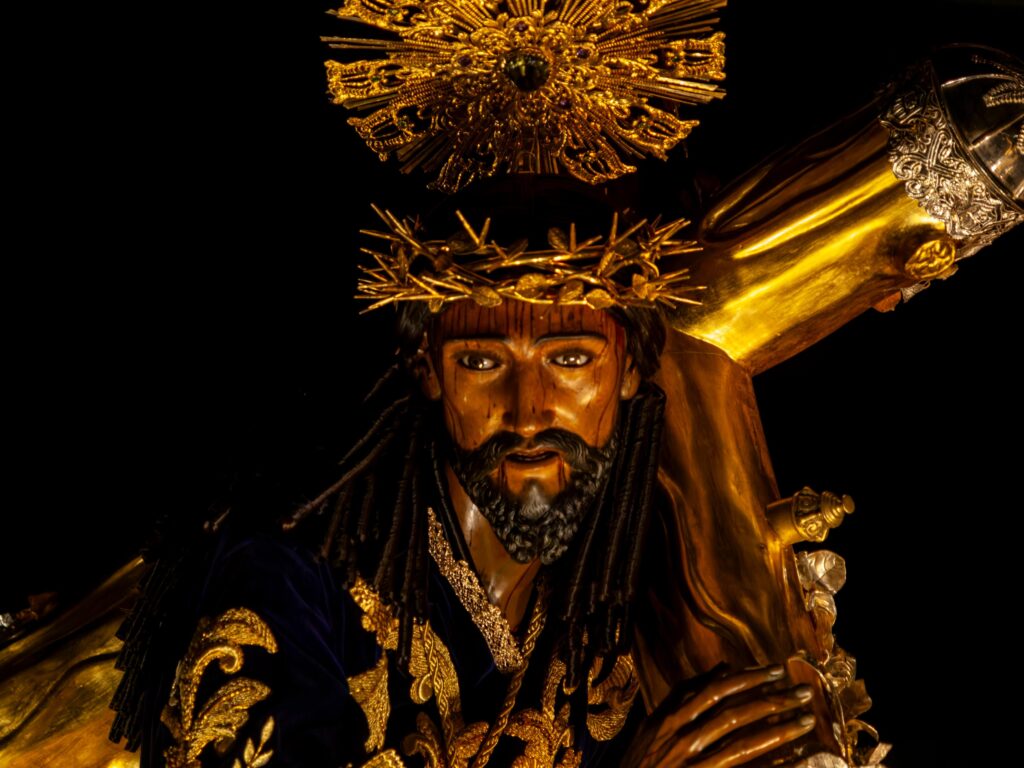
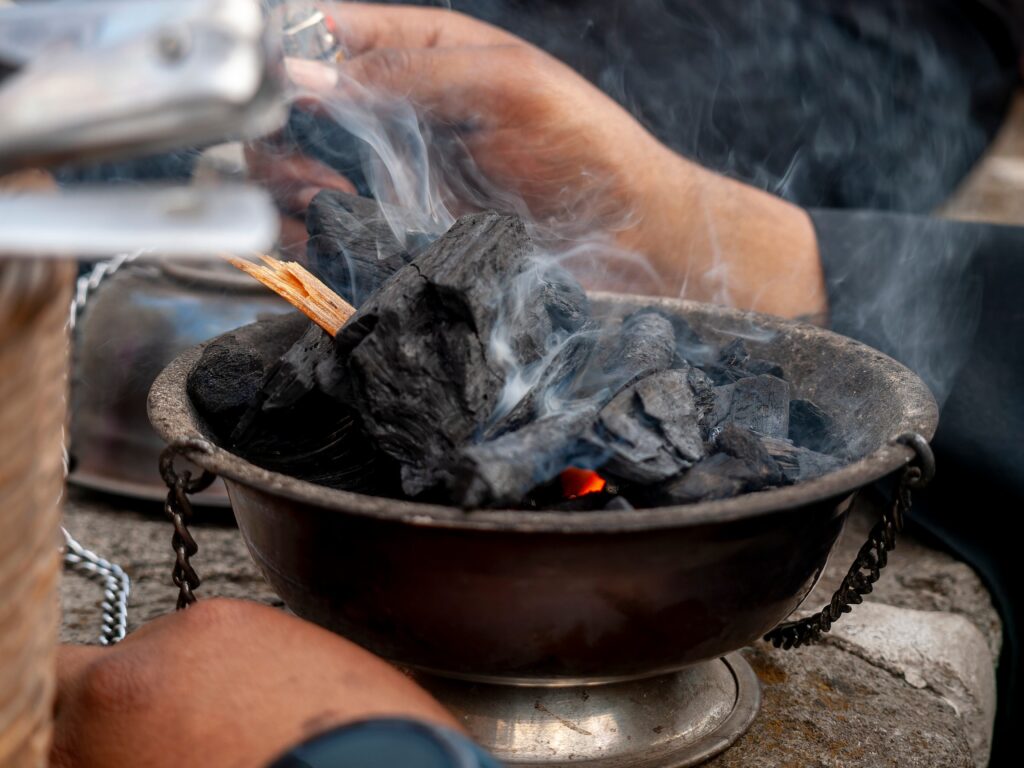
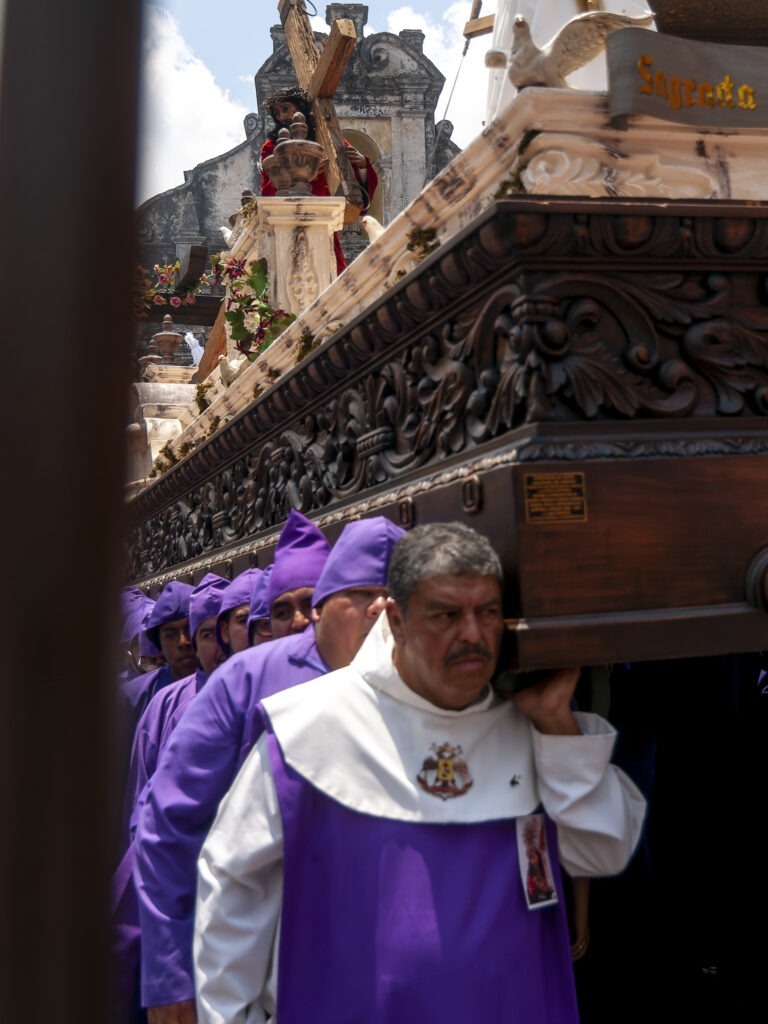
By mid-morning, the low thud of a funeral march rolls through the city like distant thunder. A brass band rounds the corner. Incense smoke curls into the air, sweet and resinous. And behind it appears the anda—a massive wooden platform bearing statues of Christ or the Virgin Mary, carried on the shoulders of dozens of devoted participants known as cucuruchos and corgadoras.
This is the heart of Antigua’s Lent and Holy Week.
The floats can weigh several tons. Yet they move with deliberate grace, swaying slightly in rhythm with the music. The carriers—men in purple robes during Lent, black during Good Friday—step in synchronized cadence. There is no rush. Every movement is measured, almost meditative.
Stand close enough and you can see it in their faces: concentration, strain, serenity. Some close their eyes. Others look straight ahead. For many, this is not just tradition—it is a promise fulfilled, a prayer embodied. Participants sign up months in advance for the chance to carry for as little as 30 minutes. That half hour becomes a pilgrimage in miniature.
As a visitor, you are not kept at a distance. You are woven in. You walk alongside the procession. You hear the scrape of wood against shoulder pads. You feel the ground tremble slightly beneath unified steps. The air is thick with copal incense, clinging to your clothes long after the march has passed. It is immersive in the truest sense—less spectacle, more shared breath.
Antigua itself feels designed for this drama. Vivid-colored colonial buildings line narrow streets. Baroque church facades rise against a backdrop of looming volcanoes. When the processions pass through the ruins of ancient convents or beneath crumbling archways, time seems to fold in on itself. The 16th century doesn’t feel far away.
Yet what makes Holy Week here extraordinary is not simply its scale—though it is widely considered one of the largest in the world. It is the intimacy. Despite international attention and a growing number of travelers, the ritual remains deeply personal for locals. Grandparents teach grandchildren how to craft alfombras. Families gather in the early hours of the morning to prepare a stretch of street. Faith is handed down like a recipe, adjusted but never abandoned.
For travelers, the experience is transformative. You may arrive curious about a famous festival. You leave having witnessed something profound about community and resilience. In a world obsessed with speed, Antigua insists on slowness. The processions can last 12, even 23 hours. They wind patiently through every neighborhood, blessing each corner. No one checks a clock. The journey itself is the purpose.
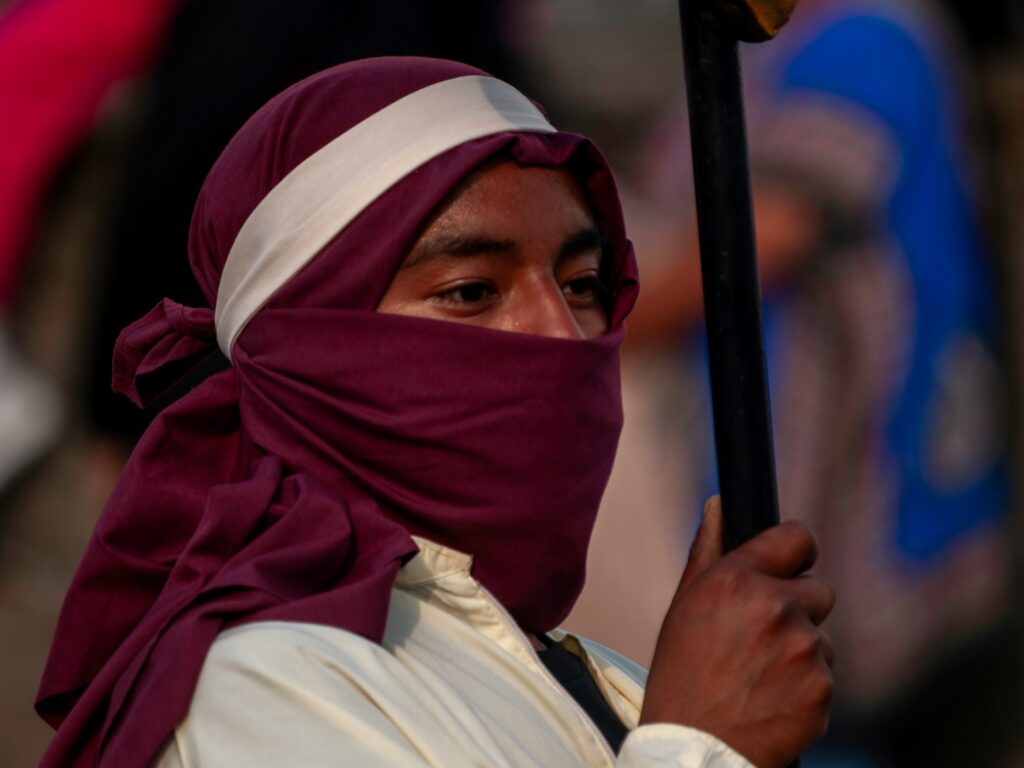
And perhaps that is the quiet lesson Holy Week offers. The weight carried by the cucuruchos is visible—wood, sculpture, history. The weight carried by everyone else is invisible: grief, gratitude, hope. For one week each year, those burdens are acknowledged, shared, and lifted together, step by deliberate step.
If you plan to experience it—and you should—book early. Wake before sunrise. Stand close enough to feel the music in your chest. Let the incense settle around you. Watch as an entire city turns its streets into sacred ground.
Some journeys take you across oceans. Others take you inward.
In Antigua during Holy Week, you may find yourself doing both at once.
Photos and text by Luis Noriega