

176 Schools and Counting: The Story of School the World
When School the World marked its 16th anniversary this year, the organization celebrated an extraordinary milestone: 176 schools and 101 playgrounds built across Guatemala, Honduras, and Panama. What began with one small construction project in rural Guatemala has grown into a regional movement to disrupt the cycle of extreme poverty through education.
The organization’s founding vision emerged from a simple but powerful realization: lasting change in poor, rural communities cannot be achieved through infrastructure alone. A sturdy building may be the first step, but true transformation depends on what happens inside the classroom—and beyond it. From the beginning, School the World’s model has sought to ensure that every new classroom is part of a larger commitment to quality education.
Over the years, that approach has evolved into a holistic strategy: building schools and playgrounds, training teachers, engaging parents, offering scholarships, and strengthening early childhood education. Each initiative is part of a broader effort to improve learning outcomes and foster community ownership.
In the Heart of Quiché: Building More Than Schools
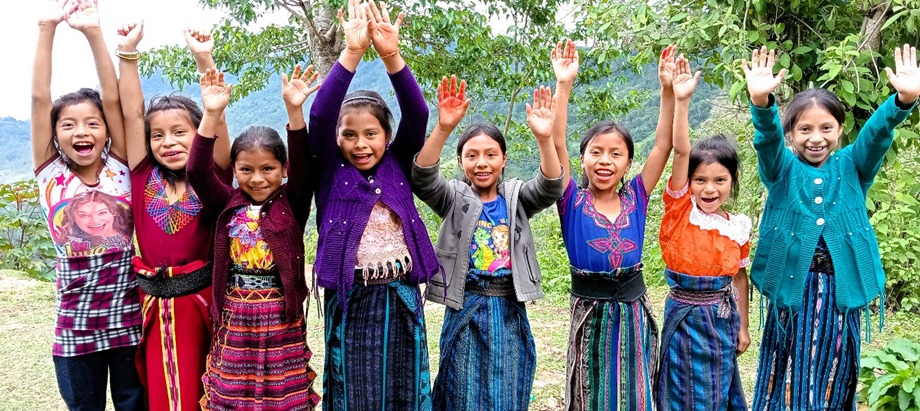
In Guatemala, the organization’s roots are in the department of Quiché, a region of rugged beauty and enduring inequality. Home to many Maya K’iche’ communities, the highlands are defined by steep terrain, vibrant culture, and historic challenges in access to education. Many children walk long distances to reach overcrowded or poorly equipped schools, while linguistic and cultural barriers further complicate learning.
Within these conditions, School the World operates as a partner rather than a benefactor. Each new project begins with collaboration among parents, local leaders, municipal officials, and the Ministry of Education. Communities contribute labor, materials, or land; local governments help sustain the schools long after the ribbon-cutting ceremonies have ended.
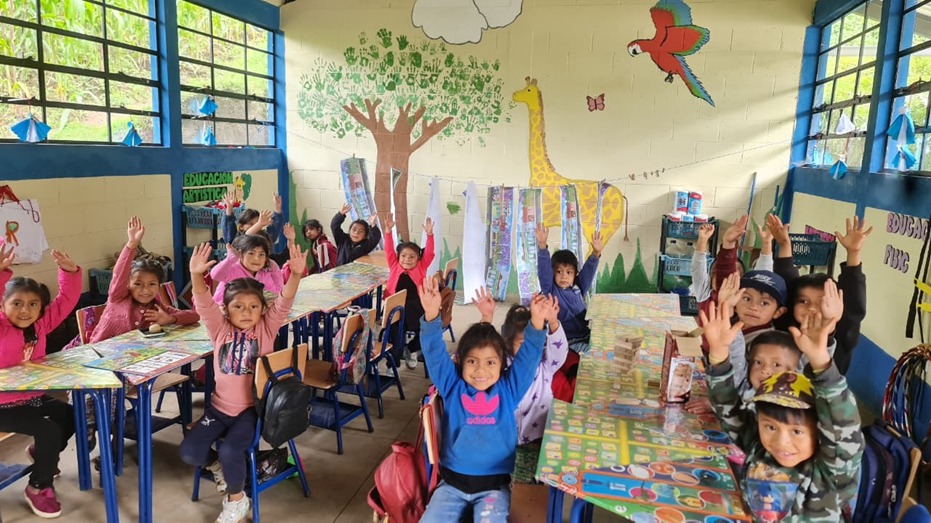
In Quiché, the organization’s five-year “Community School” partnerships integrate several elements that work in tandem. Classrooms and playgrounds are built or renovated; teachers receive ongoing professional development; parents participate in workshops that strengthen their role in supporting learning; and scholarships help children from the poorest households remain in school. In early childhood programs, children gain the foundational skills that make them ready to learn on day one of primary school.
This layered approach responds to a reality often seen in rural Guatemala: children who fall behind in the early years rarely catch up. By combining physical infrastructure with training, community engagement, and consistent follow-up, School the World builds systems that endure.
Operating in the highlands comes with significant challenges. Remote locations mean higher construction costs and longer travel times. Instruction must honor the local K’iche’ language while meeting national education standards. Economic pressures pull many children into work before completing school. Yet the organization’s sustained presence has built trust, and its programs continue to expand to new communities each year.
Recent projects in Quiché have included new classrooms, classroom libraries, and teacher coaching initiatives that reach hundreds of students. Dedication ceremonies—where teachers, families, and local officials gather to celebrate—mark milestones not just in construction, but in shared commitment to education as a collective good.
To learn more about service trips for students, families, and corporate groups that help support this work, visit the School the World website.
Why It Matters
Guatemala’s progress in education remains uneven, with rural and indigenous areas lagging behind urban centers. In departments like Quiché, decades of underinvestment and marginalization have left schools under-resourced and students at risk of falling through the cracks. Improving education in these communities is not simply about academic success—it is about opportunity, dignity, and long-term social and economic resilience.
Since its founding, School the World has demonstrated that when children learn, entire communities change. Parents become advocates for education. Teachers gain new skills and confidence. Children grow up with the literacy, numeracy, and life skills that allow them to imagine a different future.
Today, the organization continues to deepen its impact in Guatemala while replicating its model in Honduras and Panama. Its partnerships with local governments, international volunteers, and corporate sponsors have allowed it to sustain programs that reach thousands of students each year.
Sixteen years and 176 schools later, the organization’s mission remains rooted in the same conviction that sparked it: that quality education, grounded in local partnership and community empowerment, is the most powerful tool to break the cycle of poverty—one classroom, one child, and one village at a time.