

To read, to learn, to imagine is a child’s right. In Guatemala’s rural Highlands (Altiplano), Child Aid protects that right with an innovative education program.
Perhaps you’ve traveled through rural communities connected by single-lane roads that traverse the many hills and valleys of Guatemala. If you have, you likely experienced rich, traditional Mayan cultures, heard many Indigenous languages, and admired the beauty of the natural landscape. You also probably saw multi-generational poverty that limits the potential of these communities to grow and thrive. The 2023 World Bank report shows nearly 60% of the Guatemalan people live in poverty and even more so in the rural areas.
A visit to any elementary school reveals how few resources these communities have. Many rural classrooms lack books and adequately trained teachers that can help children learn and develop critical thinking skills. It is no secret that when a child is taught how to read, write and think critically, they are better equipped to bring about change for themselves, their family and their community. However, across rural Guatemala, students are not learning – and not reaching their full potential. To be exact, Ministry of Education data demonstrates that only 37% of students finish 9th grade. Child Aid was founded to change this, to provide the tools, training, and support these schools need to set their students up for success.
Since its founding, Child Aid has been committed to bringing quality education to communities throughout the rural highlands of Guatemala. The organization provides a research-based, culturally driven literacy program designed to create a sustainable, locally-led education system that fosters system-wide change, lifting communities out of poverty.
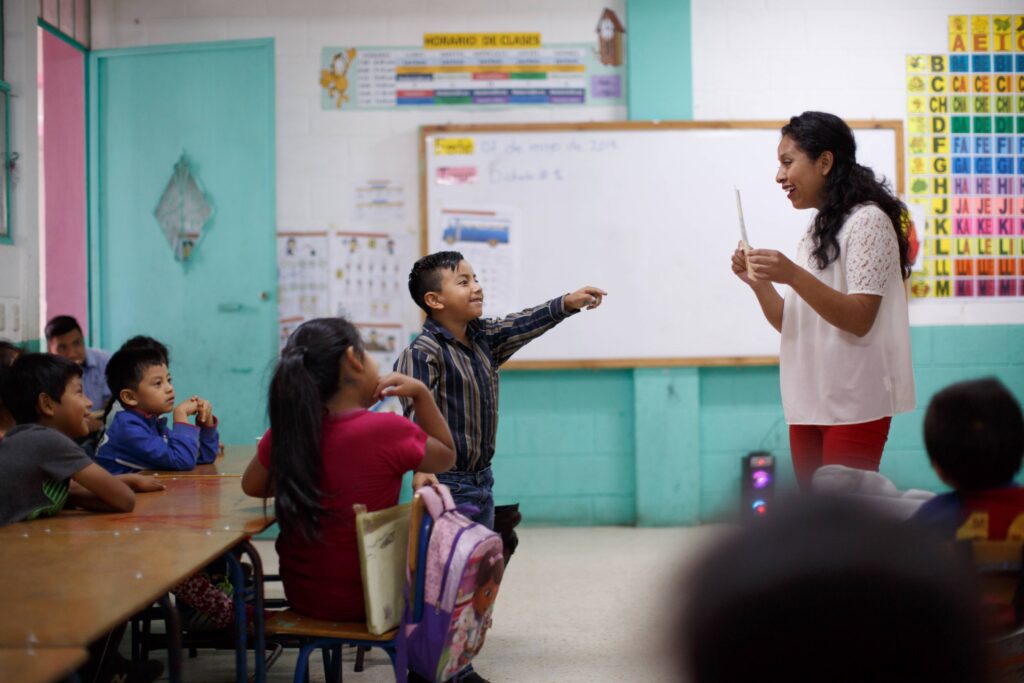
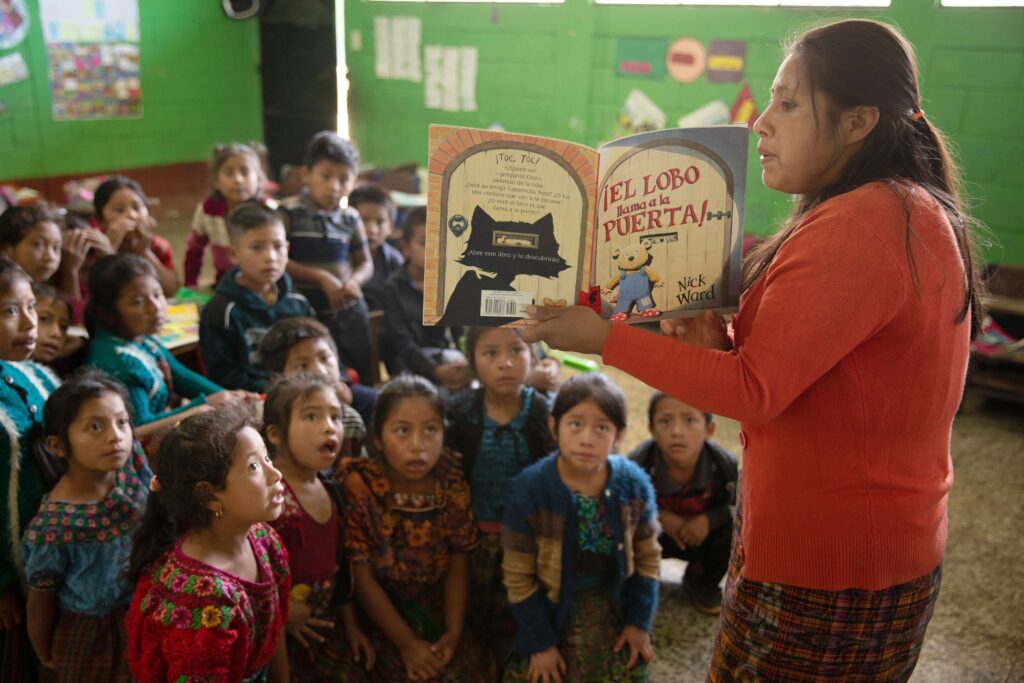
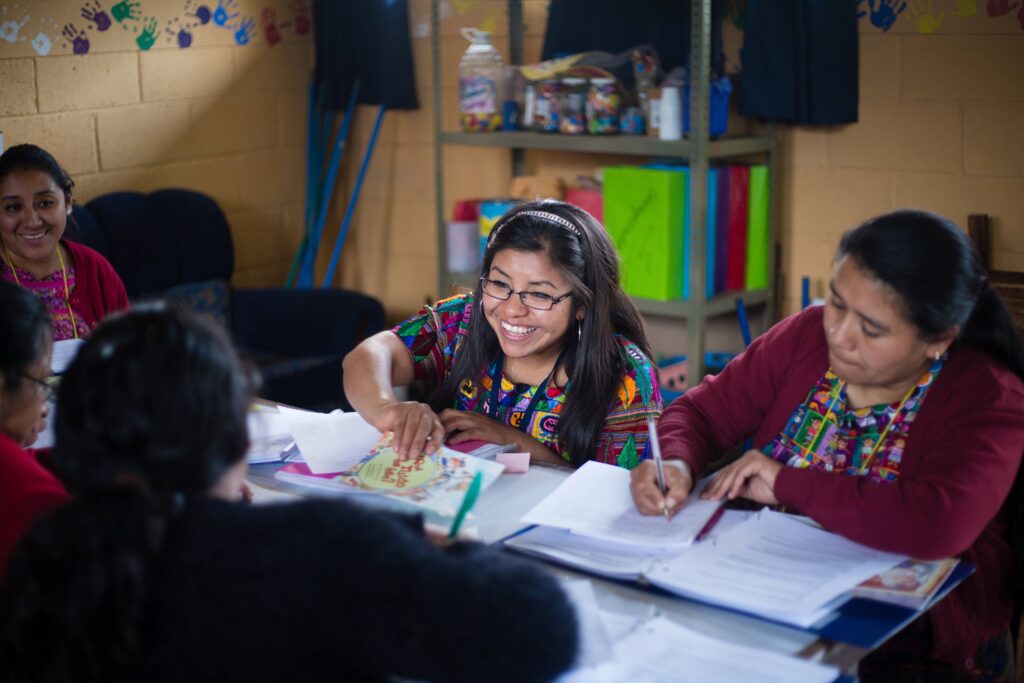
Child Aid operates out of four regional offices (Sololá, Totonicapán, Quiché, Chimaltenango), each with a team of skilled trainers. Most are local to the region, speak the local Mayan languages, and understand the culture. Trainers lead teacher workshops, visit classrooms, and work closely with rural schools for three years. They ensure teachers get access to the most up-to-date classroom techniques and methodology, that the bookshelves in their classrooms are filled with engaging, age-appropriate, Spanish-language books for students to read, and that a culture of care and curiosity encourages student engagement at every step of the learning process.
Today, Child Aid works with roughly 150 schools each year, training teachers and watching as their students learn not just to read and write, but to think critically – to explore their creativity and envision a brighter future for themselves and their families. The staff have met children who are the first in their family to read or the first to stay in school past the fourth grade. They hear children read their own stories that are full of joy and imagination.
This year Child Aid is hitting the first of a series of exciting milestones as an organization: delivering 1,000,000 books (learn more at: https://child-aid.org/campaign/one-millionth-book-campaign/ ) to classrooms and kids across Guatemala. But that is just the beginning. Thanks to ongoing donations and sponsorships, the organization is striving to reach a total of 5,000 teachers trained and 250,000 students taught. These are ambitious goals, but ambition breeds success – and Child Aid’s ambition knows no bounds.
Find out more about how to support Child Aid and contribute to the future of Guatemala’s children and families at child-aid.org.